News Stories

Ultra High Definition Revolution

ETC’s Phil Lelyveld recently produced and moderated a media panel on the “Ultra High Def Revolution.” Presented by the Academy of Television Arts and Sciences at CBS Studios, panelists included Oscar- and Emmy-winning DP Dave Stump of the ASC, Sony Pictures Television’s Phil Squyres, and award-winning DPs and lighting experts Bradford Lipson and Greg Gardiner. Vendors demonstrating UHD solutions included Advantage Video Systems, AJA Video Systems, Blackmagic Design and Sony Pictures Entertainment.
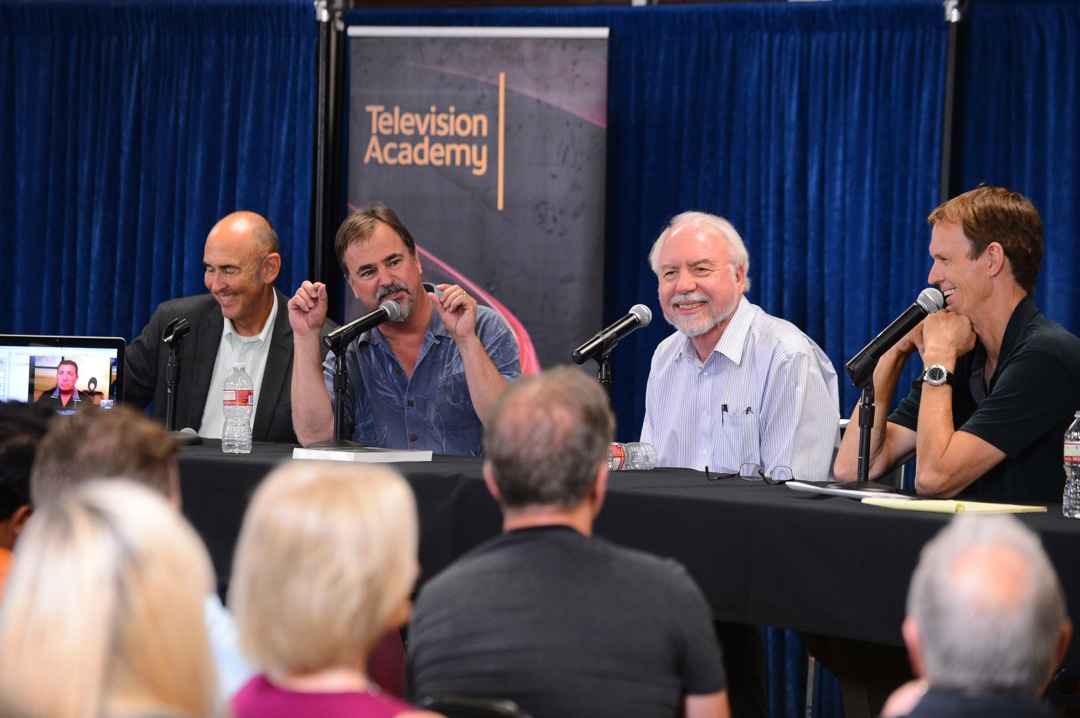
140624 ATVAS 8

The panel addressed how UHD technology is impacting the television industry and consumer viewing patterns. UHD adoption is expected to increase as prices for 4K TVs have dropped 85 percent worldwide in just two years. In 2013, 1.6 million UHD TVs shipped globally.

Watch the full video here: http://www.emmys.com/video/ultra-high-def-revolution-technology-primer

“4K has become so prevalent in the entertainment industry that 65 episodes of ‘Breaking Bad’ were re-scanned and re-mastered in 4K,” reports TheHollywoodTimes blog.

Other series that have turned to UHD include “The Blacklist” (NBC), “Masters of Sex” (Showtime), “Battle Creek” (CBS) and last season’s “Rake” (Fox), which Gardiner shot in 4K.

Additionally, the Netflix hit “House of Cards” is now streaming in Ultra HD, while other streaming services such as Amazon and M-GO say they will offer 4K content soon.

Panelists discussed production challenges in moving from HD to Ultra HD, including the impact of 4K on lighting, set design and make-up.

UHD production solutions were also on display by leading vendors:

Advantage Video demonstrated its new 4Kase, an on-set dailies, storage and color grading system. The system supports 4K data for mobile and on-set productions.

AJA showcased the new CION with 4K/UHD production camera, an ergonomic 4K sensor-based production camera that supports formats from HD up to true 4K and high frame rate support.

Blackmagic demoed the new URSA camera and 4K Cinema camera systems with Super 35mm size sensor and professional global shutter, while Sony provided on-stage demonstrations using the F55 CineAlta 4K Camera.


< PREVIOUS ARTICLES NEXT ARTICLES >

Specification for Naming VFX Image Sequences Released

ETC’s VFX Working Group has published a specification for best practices naming image sequences such as plates and comps. File naming is an essential tool for organizing the multitude of frames that are inputs and outputs from the VFX process. Prior to the publication of this specification, each organization had its own naming scheme, requiring custom processes for each partner, which often resulted in confusion and miscommunication.

The new ETC@USC specification focuses primarily on sequences of individual images. The initial use case was VFX plates, typically delivered as OpenEXR or DPX files. However, the team soon realized that the same naming conventions can apply to virtually any image sequence. Consequently, the specification was written to handle a wide array of assets and use cases.

To ensure all requirements are represented, the working group included over 2 dozen participants representing studios, VFX houses, tool creators, creatives and others.  The ETC@USC also worked closely with MovieLabs to ensure that the specification could be integrated as part of their 2030 Vision.

A key design criteria for this specification is compatibility with existing practices.  Chair of the VFX working group, Horst Sarubin of Universal Pictures, said: “Our studio is committed to being at the forefront of designing best industry practices to modernize and simplify workflows, and we believe this white paper succeeded in building a new foundation for tools to transfer files in the most efficient manner.”

This specification is compatible with other initiatives such as the Visual Effects Society (VES) Transfer Specifications. “We wanted to make it as seamless as possible for everyone to adopt this specification,” said working group co-chair and ETC@USC’s Erik Weaver. “To ensure all perspectives were represented we created a team of industry experts familiar with the handling of these materials and collaborated with a number of industry groups.”

“Collaboration between MovieLabs and important industry groups like the ETC is critical to implementing the 2030 Vision,” said Craig Seidel, SVP of MovieLabs. “This specification is a key step in defining the foundations for better software-defined workflows. We look forward to continued partnership with the ETC on implementing other critical elements of the 2030 Vision.”

The specification is available online for anyone to use.

Oops, something went wrong.